Comprehensive Guide 2026: Accessing Contraception and Sexual Health Services in the UK

Navigating sexual health services and choosing the right method of birth control can feel overwhelming. Fortunately, the UK features one of the most accessible and progressive reproductive healthcare systems in the world. Whether you are a British citizen, a long-term resident, or an international student, understanding how the National Health Service (NHS) operates ensures you can manage your reproductive health safely, confidentially, and at zero financial cost.
This guide provides an up-to-date overview of available contraceptive methods, free access routes, and patient privacy rights across the UK in 2026.
1. The Golden Rule: Contraception is Free for Everyone
Unlike many other European nations or the United States, all prescription contraception is 100% free under the NHS for both men and women in the UK.
- No Hidden Charges: You do not have to pay a prescription fee for birth control methods, regardless of your income, employment status, or whether you pay standard NHS prescription charges for other medications.
- Universal Eligibility: This free care extends to international students holding a Student Visa (who have paid the Immigration Health Surcharge) and anyone registered with an NHS General Practitioner (GP).
2. Choosing Your Method: What is Available?
The NHS offers a vast selection of contraceptive options, allowing individuals to choose a method that aligns with their lifestyle, medical history, and body.
Long-Acting Reversible Contraception (LARC)
LARCs are highly recommended by UK clinical guidelines because they are over 99% effective and require no daily or monthly action once inserted.
- The Intrauterine Device (IUD / “The Copper Coil”): A small copper device inserted into the uterus. It is completely hormone-free and prevents pregnancy for 5 to 10 years.
- The Intrauterine System (IUS / “The Hormonal Coil”): Devices like Mirena or Kyleena release a low dose of progestogen locally, often significantly reducing heavy menstrual bleeding. Lasts 3 to 6 years.
- The Contraceptive Implant (Nexplanon): A small flexible rod inserted under the skin of the upper arm, releasing progestogen. Effective for 3 years.
- The Contraceptive Injection (Depo-Provera / Sayana Press): Administered every 12 to 13 weeks. Sayana Press can even be self-injected at home after proper training from a clinician.
Barrier and Short-Acting Hormonal Methods
- The Combined Oral Contraceptive Pill: Taken daily, contains both estrogen and progestogen.
- The Progestogen-Only Pill (POP / “The Mini-Pill”): Taken daily, ideal for individuals who cannot take estrogen due to high blood pressure, migraines with aura, or breastfeeding.
- The Contraceptive Patch and Vaginal Ring: Weekly and monthly hormonal alternatives to daily pills.
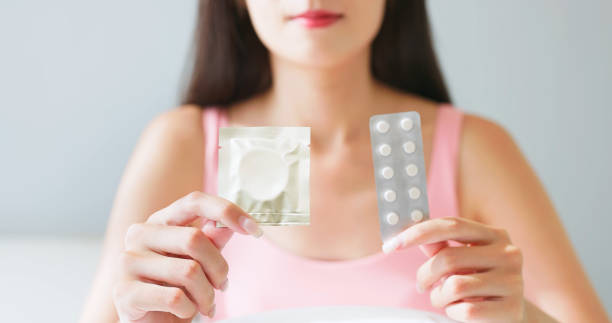
- Condoms (External and Internal): The only method that protects against both unintended pregnancy and Sexually Transmitted Infections (STIs).
3. Where to Get Free Contraception in the UK
You do not need a referral from a specialist to access birth control. You can choose from several direct-access options:
| Service Provider | Best For | Access Requirements |
|---|---|---|
| GP Surgeries (Local Doctors) | Routine pills, patches, injections, and LARC consultations. | Requires prior registration with the practice. Appointments are mandatory. |
| Sexual Health Clinics (GUM Clinics) | Specialist LARC insertions, comprehensive STI testing, and immediate support. | Self-referral. Many offer walk-in services or rapid online booking without needing a GP. |
| Local Pharmacies | Emergency contraception, condom distribution, and routine pill refills. | Walk-in access. Many high-street pharmacies offer free over-the-counter services under NHS schemes. |
| Youth Clinics (e.g., Brook) | Young people under 25 seeking tailored, friendly, and non-judgmental advice. | Walk-in or bookable online appointments specifically designed for youth. |
4. Emergency Contraception (The “Morning After” Pill)
If your regular contraception fails (e.g., a broken condom or missed pills), emergency contraception can prevent pregnancy if taken soon after unprotected intercourse.
- Levonelle: Must be taken within 72 hours (3 days) of unprotected sex.
- ellaOne: More effective than Levonelle and can be taken up to 120 hours (5 days) after unprotected sex.
- The Emergency IUD (Copper Coil): The most effective form of emergency contraception. It can be inserted by a clinician up to 5 days after unprotected sex and can be left in place as your ongoing method of birth control.
Where to get it for free: Emergency pills are free at sexual health clinics, GP surgeries, and most NHS-contracted high-street pharmacies (such as Boots or Superdrug). While you can purchase them commercially without a prescription, asking for the free NHS pharmacy service saves you between £15 and £35.
5. Absolute Confidentiality and Under-16 Rights
Confidentiality is a fundamental legal principle of NHS sexual health care. Your medical records regarding contraception are kept strictly confidential and are not shared with employers, universities, or border agencies.
- Under-16 Rights (Fraser Guidelines): In the UK, young people under the age of 16 can legally receive confidential contraceptive advice and treatment without parental consent.
- The Criteria: Medical professionals can provide this care if they are satisfied that the young person understands the advice, cannot be persuaded to inform their parents, and that their physical or mental health would suffer without the treatment.